
The Coily Hair Movement — How Black Women Are Reclaiming Their Crown
I. A New Wave Is Here 👑
Scroll through TikTok or Instagram today, and you will see a beautiful shift. Over 75% of Black women on social media now regularly showcase their natural hair. But this isn’t just a beauty trend. It is the Coily Hair Movement.
Unlike the natural hair movement of the 2010s, which focused heavily on finding the perfect curl creams and twist-out tutorials, this new 2026 wave is different. It is less about products and more about identity, healing, and rejecting substitutes like wigs and extensions as the “default” look. This movement is a profound act of self-advocacy that connects directly to our holistic health.
II. Roots of the Movement — A Brief History 🌿
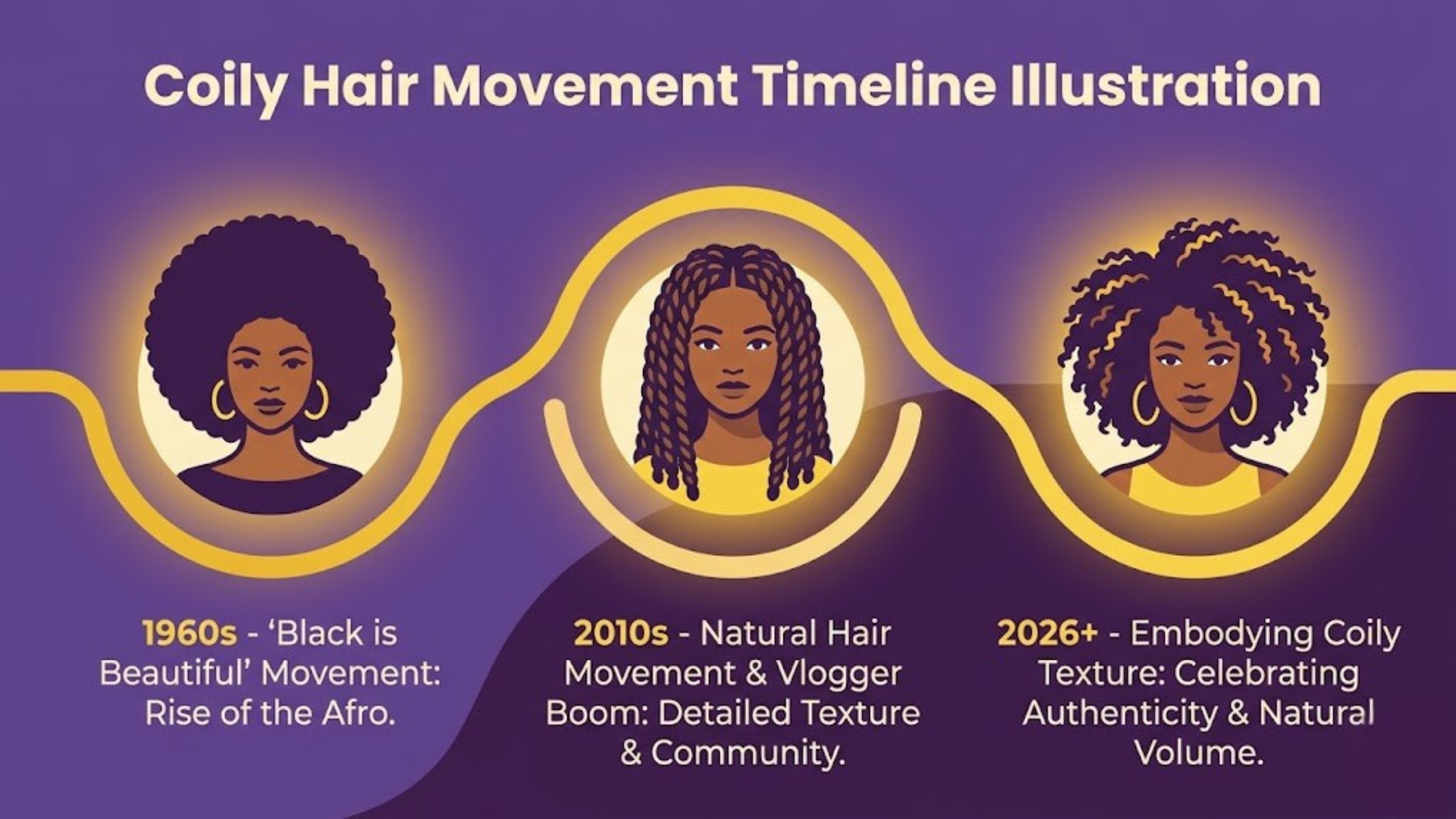
Our hair has always told a story. In the 1960s and 70s, the “Black Is Beautiful” movement saw the Afro as a powerful symbol of political resistance against Eurocentric beauty standards. By the 2000s and 2010s, the internet gave birth to the modern natural hair movement, driven by blogs and YouTube tutorials.
Today, in the 2020s, we have shifted from “learning to care for natural hair” to “refusing to hide it.” This shift was accelerated by vital health awareness. Recent revelations about toxic chemicals in relaxers and synthetic braiding hair have led many women to embrace their natural coils for health reasons, not just style.
III. What the Coily Hair Movement Looks Like Today ✨
Gen Z is leading the charge, explicitly naming this the 2026 natural hair movement across YouTube and TikTok communities. We are seeing a powerful “no extensions, no wigs” pledge gaining traction, where women publicly commit to wearing only the hair that grows from their scalp.
Crucially, 4C hair—often marginalized even within the natural hair community—is finally gaining the visibility and celebration it deserves. Campaigns like the #FreeYourCrown initiative encourage Black women to showcase their natural hair proudly on dating apps and in everyday life. Our community spaces, group chats, and comment sections have become digital sanctuaries for affirmation and shared wisdom.
IV. The Mental Health & Self-Esteem Connection 🌻
During Mental Health Awareness Month, we must talk about the emotional weight of our hair. Research shows a direct link between embracing natural hair and experiencing positive self-esteem among Black women. For too long, hair has been a site of trauma, shame, and microaggressions.
The emotional cost of conforming is high. The generational pressure to straighten or cover natural hair has been linked to anxiety, depression, and identity suppression. Going natural is a deep healing practice. Women report increased confidence, a stronger connection to themselves, and a profound sense of freedom. For many, accepting their natural hair is deeply tied to spiritual wholeness and inner healing.
V. Natural Hair as a Physical Health Decision ❤️
Did you know there is a “hair-exercise paradox”? Approximately 40% of Black women have avoided physical exercise because of the time and cost required to maintain straightened or styled hair. This lack of physical activity directly raises the risk of hypertension, insulin resistance, and heart disease—conditions that already disproportionately affect Black women.
Wearing natural hair removes this barrier. Studies show that women who wear their hair naturally are more likely to be physically active. Furthermore, we are protecting ourselves from toxic chemicals. Relaxers have been linked to an increased risk of uterine cancer, and synthetic braiding hair can contain harmful substances like lead and benzene. Natural hair care is true self-care—supporting scalp health, moisture retention, and overall physical wellness.
VI. The Workplace & Systemic Dimension 🏢
Even in 2026, Black women are still fighting for the right to wear their natural hair without facing consequences. The statistics are sobering: Black women are 1.5 times more likely to be sent home from the workplace because of their hair, and over 20% of Black women ages 25–34 report having been sent home for this reason.
Women with coily hair face twice as many microaggressions at work compared to Black women with straighter hair. This is why the CROWN Act (Creating a Respectful and Open World for Natural Hair) is so critical. Currently enacted in 24 states, it aims to end race-based hair discrimination. Embracing natural hair also relieves the massive economic burden of maintaining “professional” straight styles.
VII. Voices of the Movement — Community Perspectives 🗣️
Black content creators play a massive role in normalizing coily textures. We are witnessing a beautiful generational shift: mothers who once relaxed their daughters’ hair are now their biggest cheerleaders on their natural journeys. Stories of “big chops,” transitioning, and choosing to detach from extensions are empowering millions.
The message from our community is clear: “Your hair doesn’t need to earn beauty. It already has beauty.”
VIII. Challenges & Nuance — Holding the Full Picture ⚖️
As we celebrate, we must avoid policing each other. Not every choice to wear a wig or extensions is rooted in internalized oppression. Choice, convenience, and physical health conditions like alopecia and hair loss matter deeply.
We must also acknowledge the industry paradox: even natural hair care products can contain harmful chemicals, so ingredient awareness is vital. Furthermore, we must continue dismantling colorism and curl pattern hierarchies within our own spaces, and recognize that natural hair care requires time and access that isn’t equally available to everyone. This movement must remain liberatory, not prescriptive.
IX. What This Means for Black Women’s Wellness 🤎
Health advocates and providers must pay attention. Hair identity is intimately connected to holistic wellness—affecting mental health, physical activity, and reproductive health. When health educators create culturally resonant messaging, we meet Black women where they already are, opening doors to broader conversations about well-being.
🌿 Empower Your Health with The ROOT Framework™
If you are experiencing hair loss, scalp issues, or anxiety related to your hair journey, use our interactive framework below to prepare for your next dermatology or therapy appointment. Click each step to expand.
R — Reveal What’s Going On
Track your symptoms, emotions, or health changes. Are you noticing sudden shedding? Is your scalp irritated by certain products? Are you feeling anxious about wearing your natural hair to work? Reveal these truths to yourself first.
O — Offer Your Observations
When you see your provider, clearly articulate what you’ve noticed. Use specific, fact-based language to describe the changes, such as, “I’ve noticed thinning at my edges over the last three months after using a new edge control gel.”
O — Outline What You Need
Be clear about what you’re asking for. Request referrals, second opinions, or a culturally competent provider who understands Black hair. Tell them, “I need a care plan that supports my goal of wearing my hair naturally while treating my scalp.”
T — Take Note & Follow-Up
Write down information and make a plan for next steps. Document your diagnosis and treatment recommendations. Set a calendar reminder to check back in with yourself and your provider in 30 days.
X. Conclusion: The Crown Is Not a Trend 👑
The Coily Hair Movement is a continuation of centuries-long resistance and self-determination. The deeper truth is this: when Black women are free to show up exactly as they are—hair and all—they are more active, healthier, more confident, and more connected to their communities. For too long, Black women’s pain, intuition, and voices have been ignored or minimized in medical spaces. Embracing your natural hair is a declaration that you will no longer be minimized.
Ready to Take Control of Your Wellness?
Your health journey starts with awareness and action.
Download Your Free Wellness Violet Sheet